Mound & Alternative Septic Systems in Duluth, MN
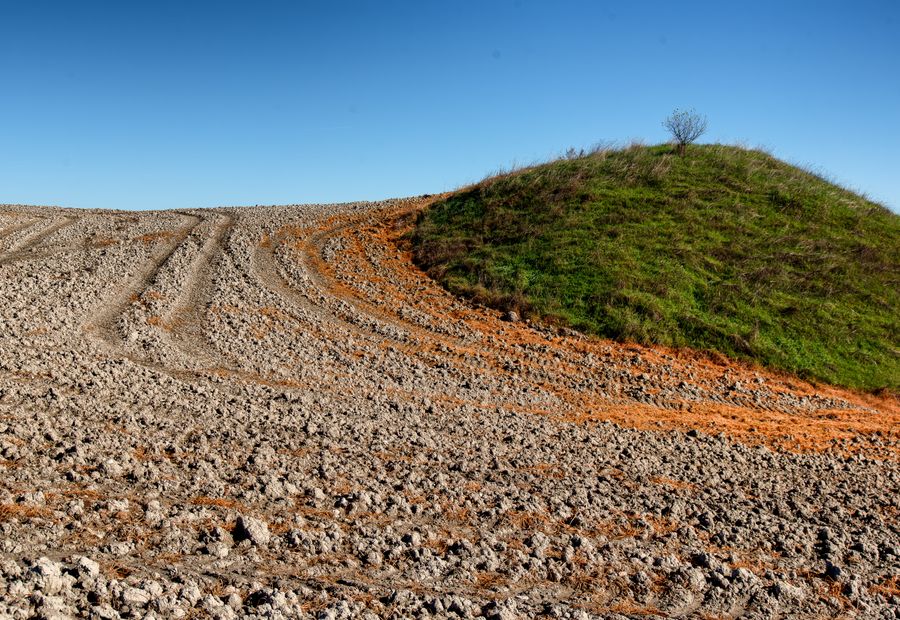
Duluth Drain Field Pros designs and builds mound systems, at-grade systems, pressure distribution fields, and other alternative septic designs across St. Louis, Carlton, and Lake counties, Minnesota. These are the systems that go in when a conventional trench field will not fit the ground. In this part of the state, that is a lot of lots.
A mound is built from imported washed mound sand placed above natural grade, with the distribution set in that sand and fed by an effluent pump. Floats in the pump tank run the cycle, and a control panel with an alarm tells you when the level climbs past where the pump should have taken it. Inside the bed, pressure distribution laterals dose the whole area in timed batches through small orifices, then let it rest. Gravity does the opposite. It pours everything into the nearest trench, drowns that ground, and leaves the rest of the field doing nothing until the near end fails.
Separation, in Plain Words
Under any field there has to be a working depth of clean soil that is not saturated and is not rock. That soil is what treats the water on its way down. Minnesota puts that figure near three feet, and your county confirms it for your parcel. Bedrock close to the surface takes that depth away. So does a seasonal high water table, and so does tight clay that holds water instead of passing it.
At-Grade Systems
An at-grade is the same idea with a lower profile. The distribution sits on the natural soil surface rather than up in a built sand bed, with cover soil over it. Sites with a little more usable depth qualify for one, and it takes less imported material and less lawn. The evaluation decides between the two. A homeowner cannot pick the cheaper one.
Aerobic Treatment
An aerobic treatment unit adds air so bacteria treat the wastewater before it reaches soil. Cleaner effluent can mean a smaller or shallower field, which sometimes rescues a lot that could not carry anything conventional. The trade is real and we say it out loud. It runs on power, it has a blower and moving parts, and it needs service on a schedule to keep working.
What This Costs and What the Alternative Is
These systems cost more because they buy soil the site did not have. Sand comes in by the truckload, the pump and panel are real hardware, and the footprint is larger. The alternative is not a cheaper field. On a site with rock two feet down, the alternative is no permitted system at all. (218) 555-0138.
Why does my lot need a mound instead of a regular field?
Because the soil under your lot runs out before the required depth. A trench field has to sit above a layer of clean unsaturated soil, and around here that layer is often interrupted by bedrock close to the surface or by a water table that comes up in spring. When the site does not have the depth, the sand gets trucked in and the field is built above natural grade instead. Nobody chose the mound. The soil evaluation found what was under your yard and the design followed it.
How much yard does a mound take?
More than a trench field, and that surprises people. The sand bed carries the pipe, and the whole thing then needs a gentle slope of cover soil running out on every side so it sheds rain and grows grass. Expect a low broad ridge rather than a hill. Placement is worth arguing about early, while it is still lines on a drawing, because moving it later means moving the whole design and the permit with it.
What happens to a mound if the power goes out?
The pump stops and the effluent stays in the pump tank. That tank holds a reserve for exactly this reason, so a normal outage passes without anything reaching the house. A long outage with a full house in it is different, so cut water use hard until power returns. The alarm on the panel is your warning that liquid is climbing past where the pump should have taken it.
Can I plant or landscape a mound?
Grass, and keep mowing it. Grass pulls water and keeps the cover soil in place, and that is the job. Trees and shrubs on or beside a mound send roots into the sand for the same reason they invade trench laterals. No vehicles, no trailers, no sheds, and no fill on top of it. A mound is a working part of the system that happens to look like part of the lawn.